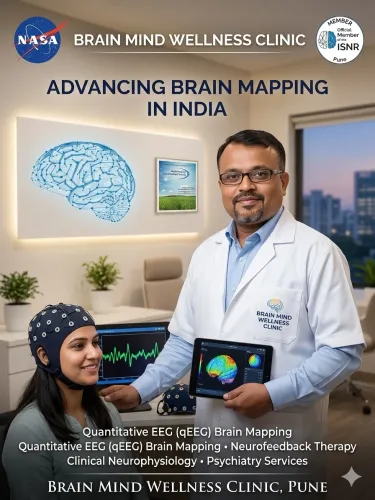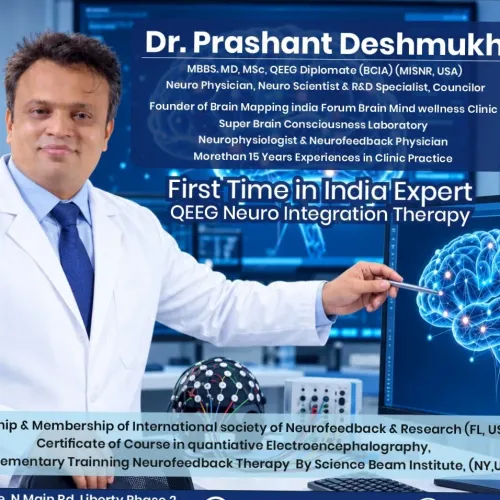
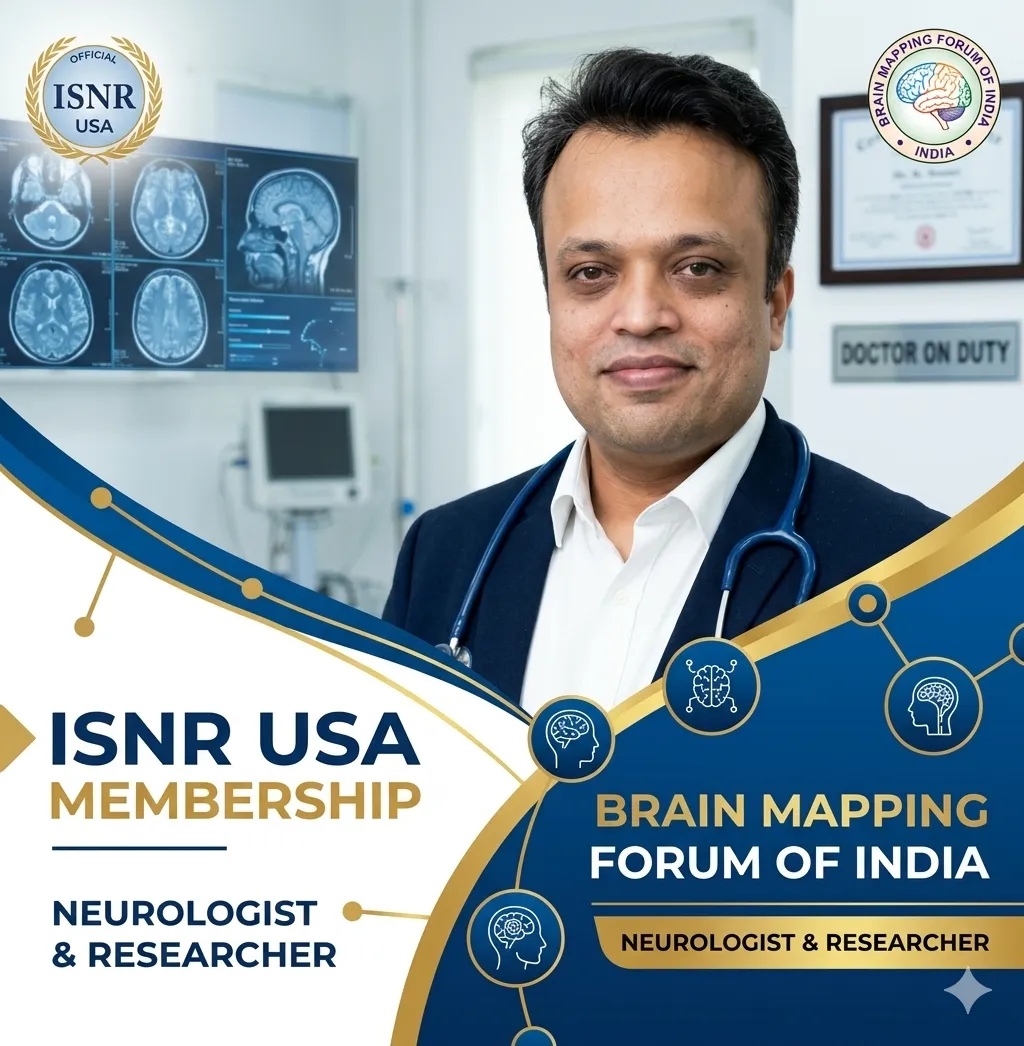
Dr. Prashant Deshmukh is a neuroscientist and pioneer in the field of brain mapping and neurofeedback in India. His career is defined by bridging high-level government research with international clinical standards to treat neurological and psychological disorders without medication.
Professional Profile: Dr. Prashant Deshmukh
Current Roles:
- Founder & President: Brain Mapping Forum of India (BMFI).
- Director: Brain Mapping Clinic & Neuro-Regulation Research Center (Pune, India).
- International Faculty: Accredited by the International Society for Neuroregulation & Research (ISNR), USA.
Government of India & National Contributions
Dr. Deshmukh has been instrumental in integrating advanced neuroscience into Indian healthcare and security frameworks:
- Public Health Initiatives: Collaborated with various state health departments to implement non-invasive brain-change solutions for ADHD, Autism, and depression.
- Policy Advocacy: He is a leading voice in establishing qEEG (Quantitative Electroencephalogram) and Neurofeedback as standardized medical practices in India.
- Research Leadership: He has led projects focused on "Brain-Mapping-Based Peak Performance" for high-stakes professionals, often applied in sports and executive leadership within national frameworks.
International Research & NASA-Grade Technology
His work is heavily centered on "NASA Technology Systems," referring to the sophisticated signal-processing algorithms used to map brainwave patterns:
- Global Research Projects: Involved in international studies on Neuro-Regulation, specifically looking at how external stimuli can "rewire" neural pathways (Neuroplasticity) to treat PTSD and chronic anxiety.
- US-India Bridge: He serves as the primary conduit for ISNR (USA) accreditation in India, ensuring that Indian practitioners meet the same rigorous scientific standards as those in the United States and Europe.
- Technological Application: His research utilizes US FDA-approved hardware and software to create "Functional Brain Maps," identifying specific localized areas of brain dysfunction that traditional MRIs often miss.
Areas of Expertise
- Neuro-Regulative Medicine: Using qEEG-guided Neurofeedback to treat the "un-treatable."
- Identity-Centric Research: Studying the neurological basis of the "Self" and how trauma or biology alters one's personality and identity.
- Cognitive Enhancement: Developing protocols for "Super-Learning" and memory retention based on global research models.
Keywords